

Tuesday, January 20, 2026
  • English
  • Marathi
No Result
View All Result
Daily PRABHAT
  • Home
  • Latest News
  • National
  • International
  • Entertainment
  • Politics
  • Sports
  • Business
  • More
    • Health
    • Lifestyle
    • Technology
    • Science
Daily PRABHAT
No Result
View All Result
  • Home
  • Latest News
  • National
  • International
  • Entertainment
  • Politics
  • Sports
  • Business
  • More
Home Health

Radiofrequency spinal cord stimulation shows improved longer-lasting pain relief: Study

by
4 years ago
in Health
A A
Radiofrequency spinal cord stimulation shows improved longer-lasting pain relief: Study
Share on FacebookShare on Twitter

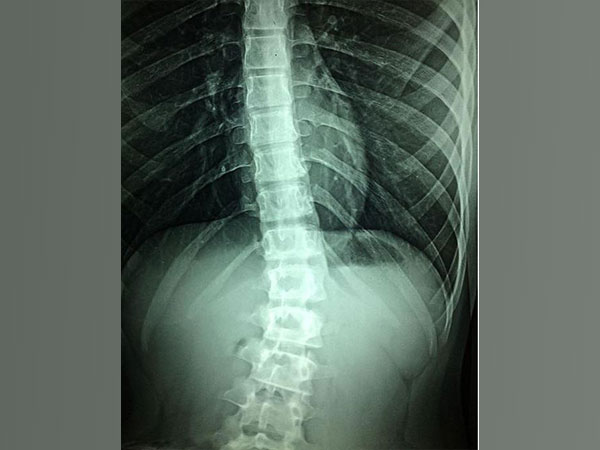
San Diego (California) [US], April 29 (ANI): According to a new study, chronic pain spinal cord stimulation (SCS) uses an implanted device to supply a small amount of electricity directly to the spinal cord, altering or blocking nerve activity and minimizing the sensation of pain reaching the brain.

The findings of the research were published in the journal ‘Bioelectronic Medicine’, a research team led by scientists at the University of California San Diego School of Medicine.

Scientists reported high-frequency SCS proved more effective at improving perceived pain reduction (PPR) than low-frequency SCS in patients studied, and there was some variation in PPR between male and female patients.

Low-frequency SCS (50 Hz) was originally approved by the U.S. Food and Drug Administration (FDA) as a treatment for intractable back and leg pain in 1989. In 2015, the FDA approved high-frequency SCS (10,000 Hz), which delivers electrical stimulation pulses that are shorter in duration, lower in amplitude and do not induce paresthesia, the abnormal sensation of tingling or prickling.

The newly published retrospective study examined 237 patients who had received SCS treatment between 2004 and 2020: 94 patients (40 females, 54 males) who received HF-SCS and 143 patients (70 females and 73 males) who received LF-SCS.

At three and six months post-implantation, the researchers found that PPR across all patients improved compared to baseline, but HF-SCS produced greater PPR than LF-SCS. HF-SCS was also associated with less subsequent use of opioids to mitigate pain.

Male PPR, for example, was significantly better for HF-SCS at three and six months when compared to LF-SCS, while this was only true for females at the 6 month time point.

LF-SCS males used more opioids post-implantation and at six months while females used more opioids post-implantation, at three, six and tended to use more opiates at the 12-month time-point.

“Our work was sparked by a growing literature that demonstrate sex specific immune pathways differentially contribute to chronic pain processes,” said senior author Imanuel Lerman, MD, an associate professor of anesthesiology, pain management specialist at UC San Diego Health, and an affiliate of the Qualcomm Institute.

“The observed parameter-specific (high versus low frequency) sex-based differences in spinal cord stimulation efficacy and opiate use are definitely intriguing.”

“It’s a first step in the right direction, but clearly more work needs to be done to carefully characterize sex specific pain regulatory pathways that may prove responsive to specific types of neuromodulation and or pharmaceutical therapies.” (ANI)

ShareTweetSendShareSend

Latest News

“Will cooperate with CBI in Karur stampede case”: TVK

UP: Gautam Buddha Nagar SDM assures action against guilty in Noida techie death case

Despite marginal improvements, Delhi’s air remains unbreathable at 397 AQI

Renowned Italian fashion designer Valentino Garavani passes away at 93

Akshay Kumar’s escort car meets with accident in Mumbai

Ibrahim Zadran, Darwish Rasooli propel Afghanistan to 38-run win over West Indies in T20I series opener

Davos: Pashtun group, human rights activists protest against Pakistan’s atrocities

Taiwan records 2 PLA aircraft sorties, 6 PLAN vessels around its territory

Republic Day 2026: Nearly 10,000 special guests invited to witness parade at Kartavya Path

Pakistan: 26 people dead, 81 still missing in Karachi’s Gul Plaza fire

San Diego (California) [US], April 29 (ANI): According to a new study, chronic pain spinal cord stimulation (SCS) uses an implanted device to supply a small amount of electricity directly to the spinal cord, altering or blocking nerve activity and minimizing the sensation of pain reaching the brain.

The findings of the research were published in the journal 'Bioelectronic Medicine', a research team led by scientists at the University of California San Diego School of Medicine.

Scientists reported high-frequency SCS proved more effective at improving perceived pain reduction (PPR) than low-frequency SCS in patients studied, and there was some variation in PPR between male and female patients.

Low-frequency SCS (50 Hz) was originally approved by the U.S. Food and Drug Administration (FDA) as a treatment for intractable back and leg pain in 1989. In 2015, the FDA approved high-frequency SCS (10,000 Hz), which delivers electrical stimulation pulses that are shorter in duration, lower in amplitude and do not induce paresthesia, the abnormal sensation of tingling or prickling.

The newly published retrospective study examined 237 patients who had received SCS treatment between 2004 and 2020: 94 patients (40 females, 54 males) who received HF-SCS and 143 patients (70 females and 73 males) who received LF-SCS.

At three and six months post-implantation, the researchers found that PPR across all patients improved compared to baseline, but HF-SCS produced greater PPR than LF-SCS. HF-SCS was also associated with less subsequent use of opioids to mitigate pain.

Male PPR, for example, was significantly better for HF-SCS at three and six months when compared to LF-SCS, while this was only true for females at the 6 month time point.

LF-SCS males used more opioids post-implantation and at six months while females used more opioids post-implantation, at three, six and tended to use more opiates at the 12-month time-point.

"Our work was sparked by a growing literature that demonstrate sex specific immune pathways differentially contribute to chronic pain processes," said senior author Imanuel Lerman, MD, an associate professor of anesthesiology, pain management specialist at UC San Diego Health, and an affiliate of the Qualcomm Institute.

"The observed parameter-specific (high versus low frequency) sex-based differences in spinal cord stimulation efficacy and opiate use are definitely intriguing."

"It's a first step in the right direction, but clearly more work needs to be done to carefully characterize sex specific pain regulatory pathways that may prove responsive to specific types of neuromodulation and or pharmaceutical therapies." (ANI)

No Result
View All Result
  • Home
  • Latest News
  • National
  • International
  • Entertainment
  • Politics
  • Sports
  • Business
  • More
    • Health
    • Lifestyle
    • Technology
    • Science